April 9, 2026
Bold Action Needed: Virginia’s Budget Can Restore Coverage for Thousands
Due to federal inaction, families across Virginia are making difficult decisions about whether to pay for rising health care premiums on the Affordable Care Act (ACA) marketplace or other essentials like food, housing, and transportation. This is a decision no family should have to make. An upcoming state budget compromise will determine whether families can get the help they need.
State Budget Decisions Can Impact Health Care Affordability
Proposed funding in Virginia’s House and Senate budget proposals could provide much-needed relief to many who rely on the marketplace for health coverage. With budget negotiations ongoing, we urge lawmakers to provide affordability help as soon as possible — and to as many people as possible — so fewer people in Virginia go without health care simply due to cost. Specifically, policymakers should make sure the final budget provides sufficient resources to help families afford coverage for the rest of 2026 and all of 2027 and allow a special open enrollment period to reconnect families with health coverage during 2026.
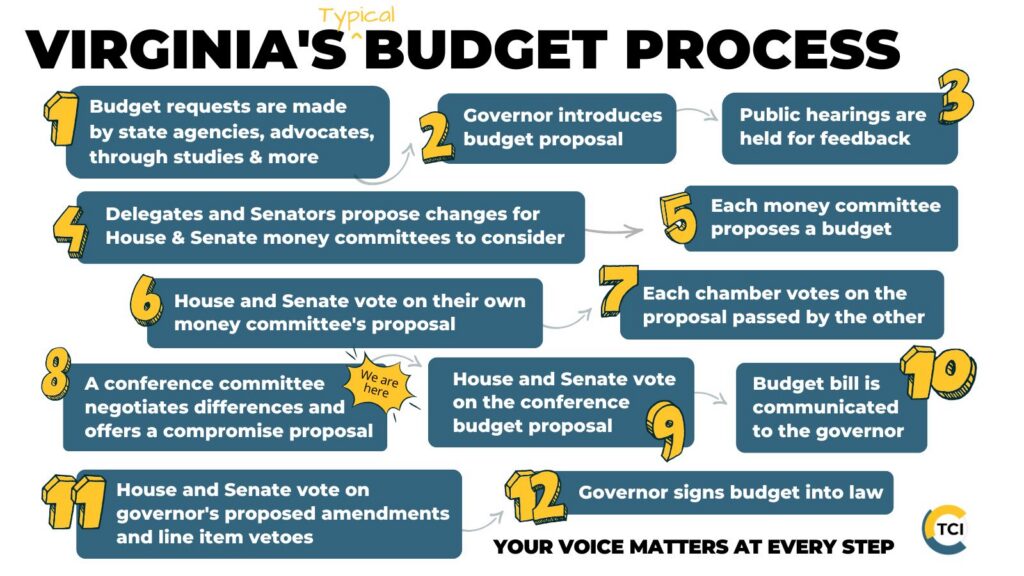
On March 14, Virginia’s General Assembly adjourned without reaching an agreement on the state budget — the largest and most consequential legislation considered each year. With a special session scheduled to convene on April 23 related to the state budget, select lawmakers, known as conferees, are still negotiating major differences between the House and Senate proposals. This process has major implications for health care affordability for people and families in Virginia who rely on ACA marketplace coverage.
One major issue that needs to be resolved is whether to end a sales and use tax break for data centers in Virginia, which costs the state over $1 billion annually. Both chambers address this growing revenue loss. The House ties it to certain energy efficiency standards. The Senate goes further to ensure data centers pay their fair share in taxes, removing the exemption entirely starting in 2027. Repealing the exemption would generate $977 million more for the General Fund (the part of the budget over which lawmakers have the most flexibility). This allows the Senate budget to provide more – and earlier – help to Virginia families who are impacted by the loss of federal enhanced premium tax credits.
What’s At Stake: Health Coverage and Access to Care for Thousands
Enhanced federal ACA premium subsidies, created in 2021 as part of the American Rescue Plan Act and extended in the Inflation Reduction Act in 2022, helped people better afford their health coverage. During this time, Virginia’s marketplace enrollment grew from 261,943 in 2021 to 388,856 in 2025. Unfortunately, Congress failed to agree to any of the proposed extensions, and the enhanced premium subsidies expired at the end of 2025.
As a result, Virginia families face higher premiums and difficult trade-offs between health care and other basic needs. Nationally, over half (55%) of marketplace enrollees report they are already or are planning on cutting back on basic household spending such as groceries to afford rising health care costs. When comparing Virginia data from the end of open enrollment in 2025 to the end of open enrollment in 2026:
- Roughly 19,000 fewer people in Virginia enrolled in ACA marketplace coverage.
- The share of people enrolled in plans costing less than $10 a month has dropped from 30% to 14%.
- On average, Virginians will pay $432 more in premiums over the course of the year, with many Virginia families having seen their monthly costs double or even triple.
- There are 9,000 more people enrolled in bronze-level plans, which have higher out-of-pocket costs and deductibles, making them more expensive for families if they need to access health services.
According to Virginia’s Health Benefit Exchange, an additional 33,000 people have disenrolled from ACA marketplace coverage as of early April. That number is expected to rise as we move through April, as many individuals who were automatically re-enrolled at the start of the year reach the end of their 90-day grace period for premium payments, or as other financial pressures hit families and create difficult budget decisions.
Recent national polling of people who have returned to the marketplace found that 80% are facing higher health care costs in 2026, with 17% unsure that they can afford their premiums for the whole year. Over half (55%) of those polled reported they are or plan to cut down on basic household spending to cover health care costs. Among the hardest hit include people living with chronic health conditions, with many reporting difficulties in affording food (48%) and monthly utilities such as electricity (41%). While state-level data is unavailable, we know that too many people and families in Virginia are experiencing the same struggles.
What’s At Play
The House and Senate budgets respond to federal inaction that has created new cost barriers to ACA marketplace health coverage. Both proposals include funding to offset rising premiums — $79.1 million in the House and $200 million in the Senate. The House proposal targets premium relief to individuals and families earning between 138% and 200% of the federal poverty level (FPL) — $37,701 to $54,640 for a family of 3 — for coverage in 2027. The Senate proposal prioritizes individuals and families earning below 400% FPL ($109,280 for a family of 3) and allows premium relief to begin in 2026 through a special enrollment period for our state exchange.
An Opportunity to Deliver on Health Care Affordability
Ultimately, Congress should come together to deliver a long-term solution and restore funding to enhanced premium tax credits. In the meantime, we applaud both Virginia chambers for recognizing the importance of responding to federal inaction that has priced many out of coverage or squeezed already tight budgets.
As conferees reconcile budget differences, they should maintain the ability to create a special enrollment period in 2026 and make sure funding lasts long enough — roughly 18 months — to support families as soon as possible and through 2027. Lawmakers should also invest as boldly as possible and provide relief to as many families as possible.
With ACA coverage losses growing, families are making real-time decisions about their health and financial security. And those decisions become more difficult with each passing day. Budget conferees have the power to ease that burden, and they should act with the urgency this moment demands.
Category:
Health Care