June 3, 2026
New Protections for Working People Set to Become Law in Virginia, More Work Remains
Working people in the South deserve the same protections and rights as workers elsewhere. Yet for too long, wealthy elites in Virginia and other southern states stoked anti-Black fears to consolidate power and pass laws that suppressed working people of all races and denied basic protections. Despite this, people across Virginia, often led by Black workers, have organized to change those anti-worker and anti-Black laws. This year, Virginia’s legislature took some steps in the right direction, yet much work remains.
Below is a summary of key worker rights legislation from the 2026 Virginia legislative session that will become law, and some bills that did not get across the finish line this year.
Bills the General Assembly passed and Gov. Spanberger signed into law
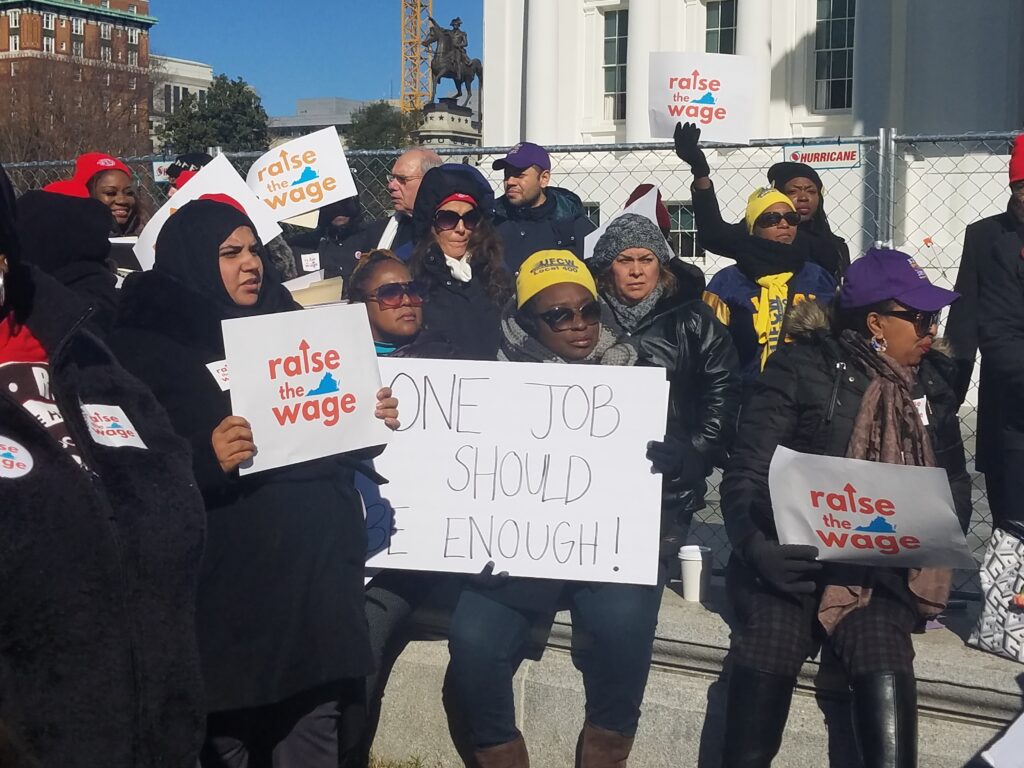
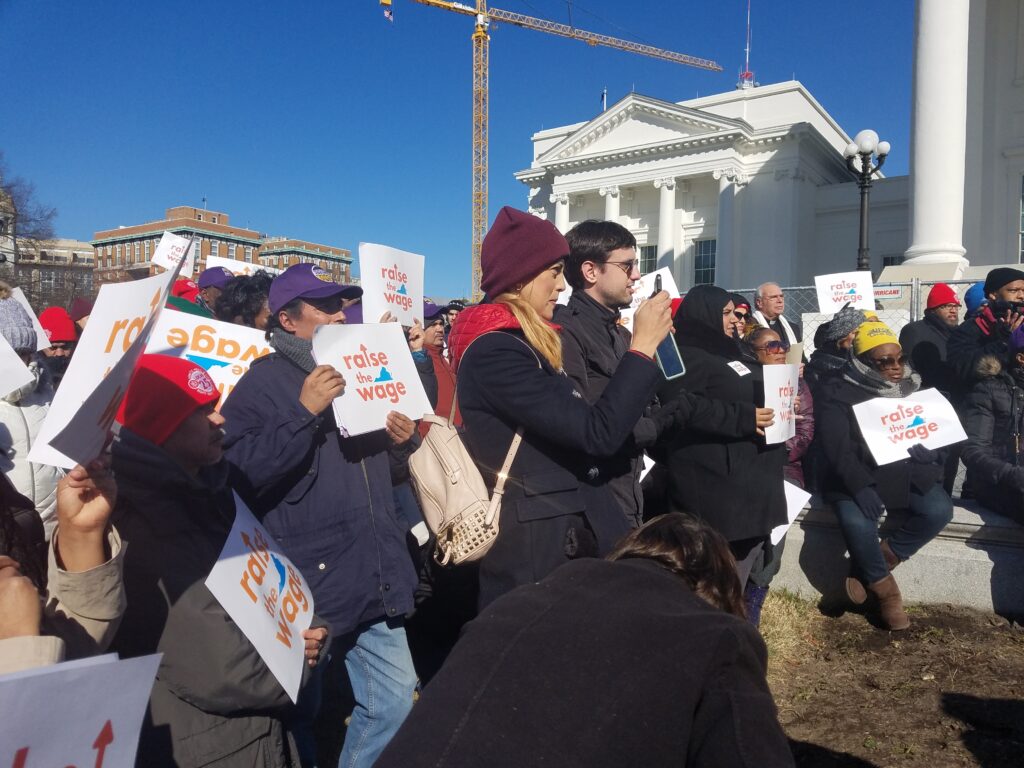
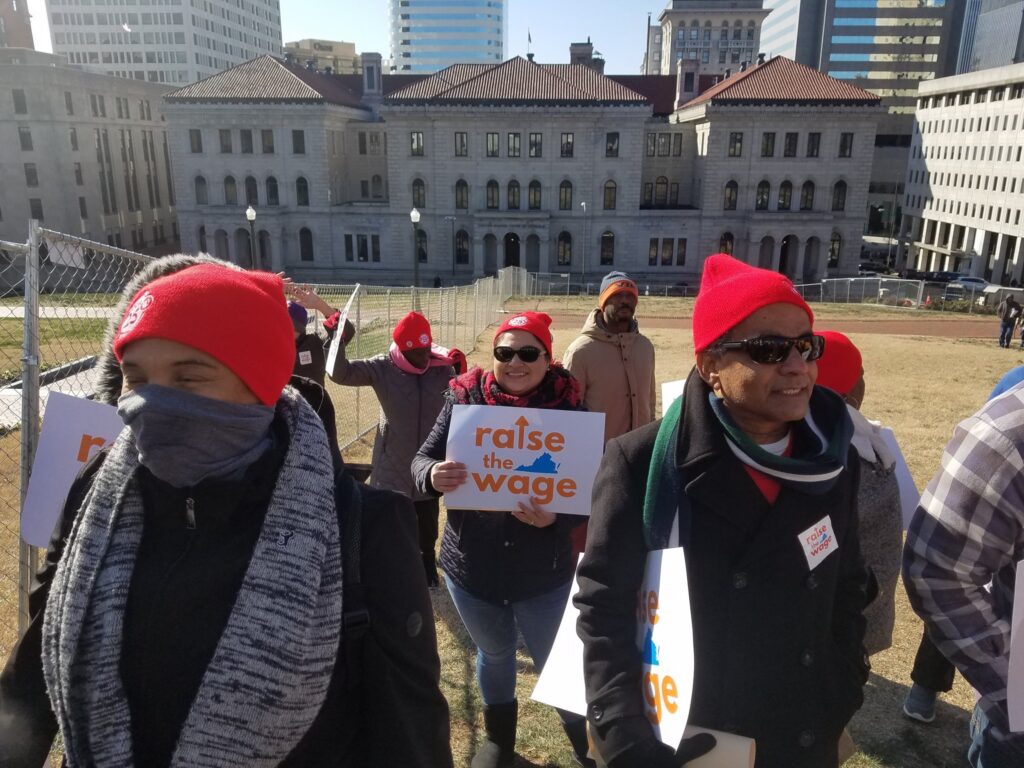
$15 minimum wage (HB 1 / SB 1): After years of work by advocates and several vetoes by former Governor Glenn Youngkin, Virginia legislators passed and Governor Abigail Spanberger signed legislation to raise Virginia’s minimum wage to $13.50 on January 1, 2027, and $15.00 on January 1, 2028, with inflation adjustments in future years. This is expected to boost wages for about 421,000 working people in Virginia. A majority of those who will benefit are workers of color, 6 in 10 are women, and over 8 in 10 work at least 20 hours a week. This legislation completes work from 2020, when a re-enactment clause was added to that year’s minimum wage legislation, stalling the increases to $15 until the bill was passed and signed again. Listen to Jonei discuss why raising the minimum wage is important to her and so many others across Virginia.
Removing exclusion of farmworkers from minimum wage (HB 20 / SB 121): For too long, policymakers excluded farmworkers, domestic workers, and other historically Black occupations from Virginia labor protections. While advocates and legislative champions removed some exclusions in 2019 and 2020, others remain. This session, after years of work, legislation was finally signed to remove the blanket exclusion of farmworkers from the minimum wage. Unfortunately, the Senate insisted on maintaining the exclusion of H-2 visa workers, including H-2A farmworkers, so more work remains.
Improving unemployment insurance (HB 1320 / SB 759; SB 433): Virginia helps a much smaller share of unemployed workers than most states and provides low weekly benefits (with weekly benefits of just $60 to $378 a week until this year) compared to our cost of living and average weekly wages. This year, lawmakers passed bills to raise unemployment compensation by $48 a week starting July 1, 2026, completing the $100/week increase they passed last year before former Governor Youngkin limited it through an amendment. Additionally, SB 433 makes sure workers locked out by their employer during a labor dispute aren’t denied unemployment benefits. Unfortunately, HB 1319 and SB 760 to standardize the length of time people are eligible for unemployment benefits (provided they meet requirements like looking for work) did not pass this year.
Paid family and medical leave (PFML) (HB 1207 / SB 2): While federal law allows most workers to take unpaid leave after the birth of a child or for a serious illness, many low-wage workers lack access to paid leave and are least able to take unpaid time off during those moments. Virginia is now the first Southern state to pass a comprehensive paid family and medical leave program, with benefits set to begin December 1, 2028. Employers with PFML programs that meet or exceed the state program’s benefits can opt out of the state program. This is a major victory despite amendments from the governor that exclude some immigrants, limit protections for domestic violence survivors compared to the legislature’s bill, and narrow who counts as family.
Paid sick days (HB 5 / SB 199): Most working people already get some sick leave, but too often the people who can least afford to take unpaid time off do not. When workers must choose between paying rent and showing up at work sick (or when they have a sick family member at home), we all lose. That’s going to change by July 1, 2027, thanks to a new law that provides almost all workers with at least 1 hour of paid sick leave for every 30 hours worked. Unfortunately, last-minute changes exclude many union shipbuilding and port workers until as late as 2031.
Strengthening labor law enforcement and protections (HB 238 / SB 644): Minimum wage, overtime, prevailing wage, and misclassification laws mean little if people are scared to report violations or employers face no accountability. Legislation signed this year makes it harder for bad employers to get away with breaking the law by improving access to civil remedies and clarifying the authority of the Commissioner of Labor and Industry and Attorney General to investigate and pursue labor law violations.
Protections against coercion based on immigration status (HB 675): One way bad employers try to get away with breaking the law is by threatening to report employees to ICE if they report violations. Legislation passed this year prohibits employers from threatening employees based on their immigration status to get away with paying subminimum wages or otherwise breaking Virginia’s wage laws.
Protections against heat stress (HB 1092 / SB 288): Virginia has a variety of safety protections for workers, but until now lacked basic requirements of access to water and breaks from extreme heat. After years of work, bills signed this year will require the Virginia Safety and Health Codes Board to adopt protective regulations on heat stress by May 1, 2028.
Addressing wage gaps with salary transparency and protections (HB 636 / SB 215): Women who work full-time are still usually paid less than men, but the size of that unfair penalty varies by state. Laws like Virginia passed this year that require employers to post salary ranges and prohibit them from asking for an applicant’s salary history (a practice that perpetuates past unfair pay) help to narrow gender pay gaps.
Protecting service workers when contractors change (HB 338 / SB 430): People who are doing their job well shouldn’t be laid off just because there’s a change in which company has the contract for work at a facility. Successful legislation this year allows local governments to require that, when a service contractor or subcontractor changes at a large commercial or multifamily property (including airports), the workers are protected from layoff for 90 days unless they are let go for cause or the new contractor can show that fewer workers are needed and any new hires come from those who were laid off.
Limiting covenants not to compete (HB 627 / SB 128; SB 170): Sometimes employers try to prevent former employees from taking new jobs by requiring them to sign agreements known as “covenants not to compete.” Bills signed this year ban enforcement of these covenants for health care workers and for employees laid off with neither cause nor severance.
Rideshare pay transparency (HB 1270 / SB 550): People driving for Uber and Lyft should know how much they made on each ride (and each week), how much of that came from tips versus fares, and how much the company made. Legislation signed this year requires rideshare companies to report this information to drivers and provide summarized data to the state DMV. (The new law does not cover non-passenger deliveries.)
Improving public works contracts (HB 569 / SB 518; HB 1046 / SB 324): Making sure contractors on public projects pay prevailing wages and provide safety trainings helps recruit skilled workers for public projects and makes sure they are paid well enough to support their families. HB 569 and SB 518 clarify and strengthen Virginia’s prevailing wage requirements, including new regulations and a work group report due by July 1, 2027. HB 1046 and SB 324 require safety trainings, maintenance of certain records, and approval of large subcontracts for public construction contracts starting July 1, 2027. Initial versions of these bills required apprentice programs on public contracts to help people get into these good jobs, but those provisions were turned into a study in the final version.
Bills that were vetoed, did not pass the General Assembly, or will need to be passed again
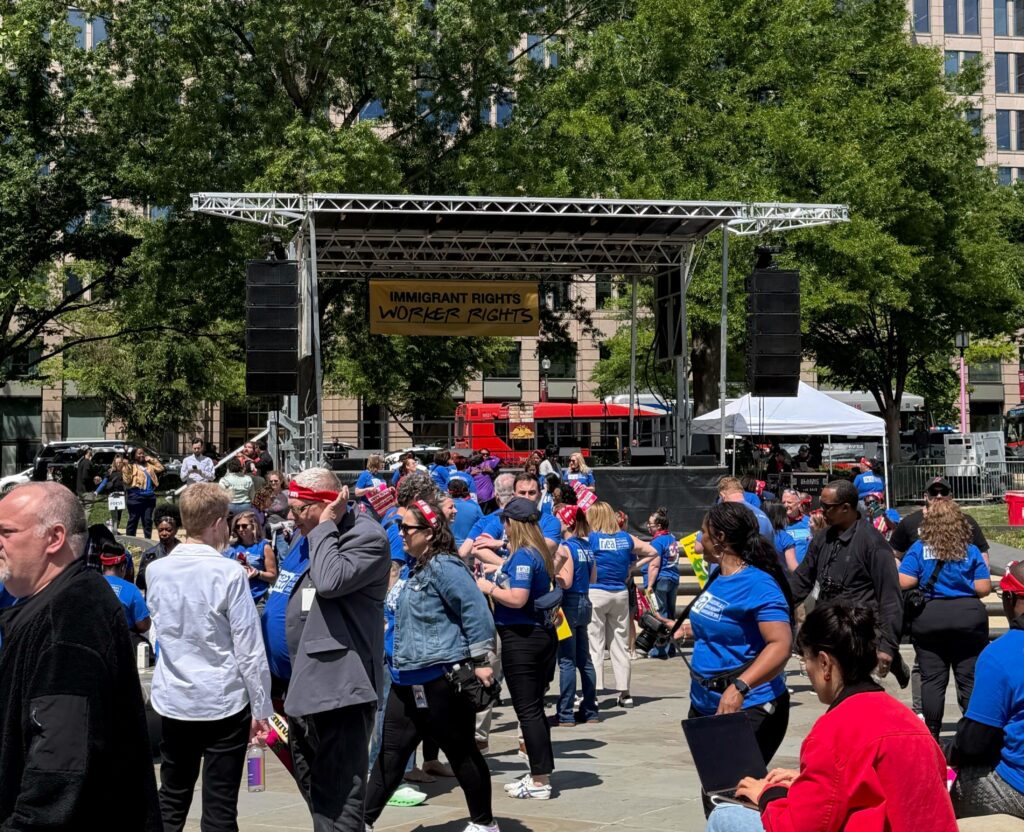
Collective bargaining rights for state and local employees (HB 1263 / SB 378): When public-sector workers can come together in a union and collectively bargain with their employer, they gain the ability to formally make their voices heard in improving their workflow and workplaces, thereby boosting services like public education and emergency responses. More broadly, unions build solidarity and mobilize working people to challenge inequality, defend civil rights through civic and political engagement, and raise wages, particularly for Black and Latino workers, by reducing pay discrimination.
Currently, Virginia has a blanket ban on collective bargaining for state employees rooted in the suppression of organizing by Black UVA hospital workers in the 1940s. Legislation introduced this year would have set Virginia on a new course by standardizing collective bargaining rights for local public-sector workers, removing the blanket ban on state employee collective bargaining, and setting up frameworks for home care workers and other state workers to engage in bargaining. This would have benefited about 400,000 local government and school board employees, home care workers who help about 27,000 people in Virginia remain safely at home, and about 140,000 state employees.
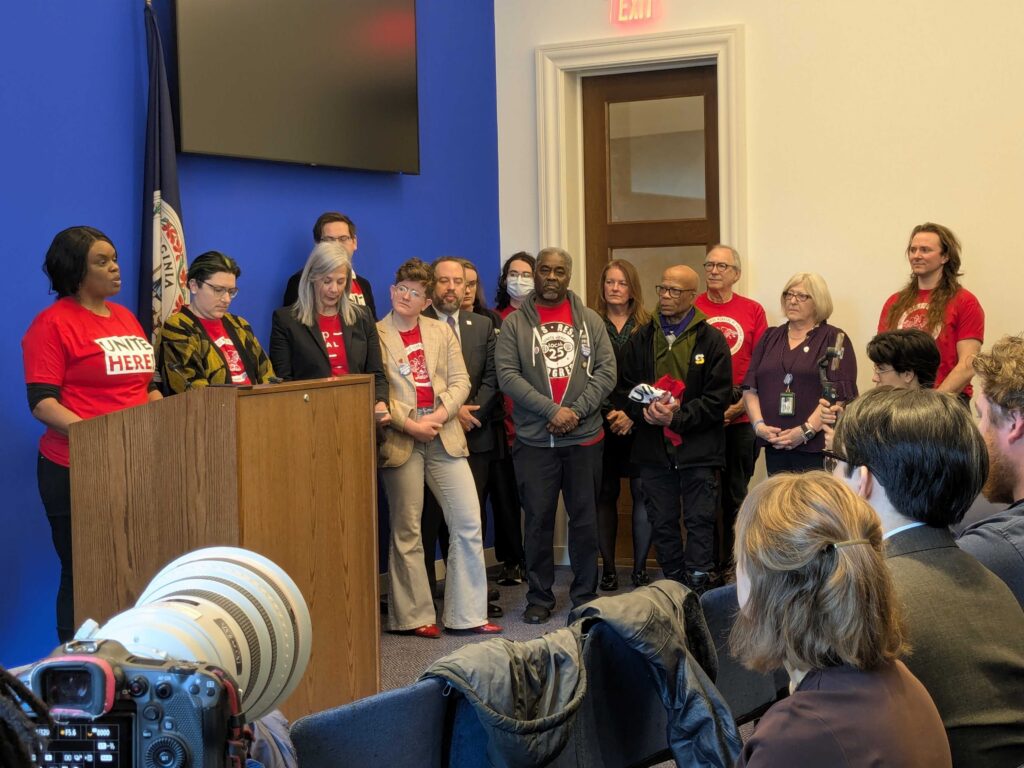
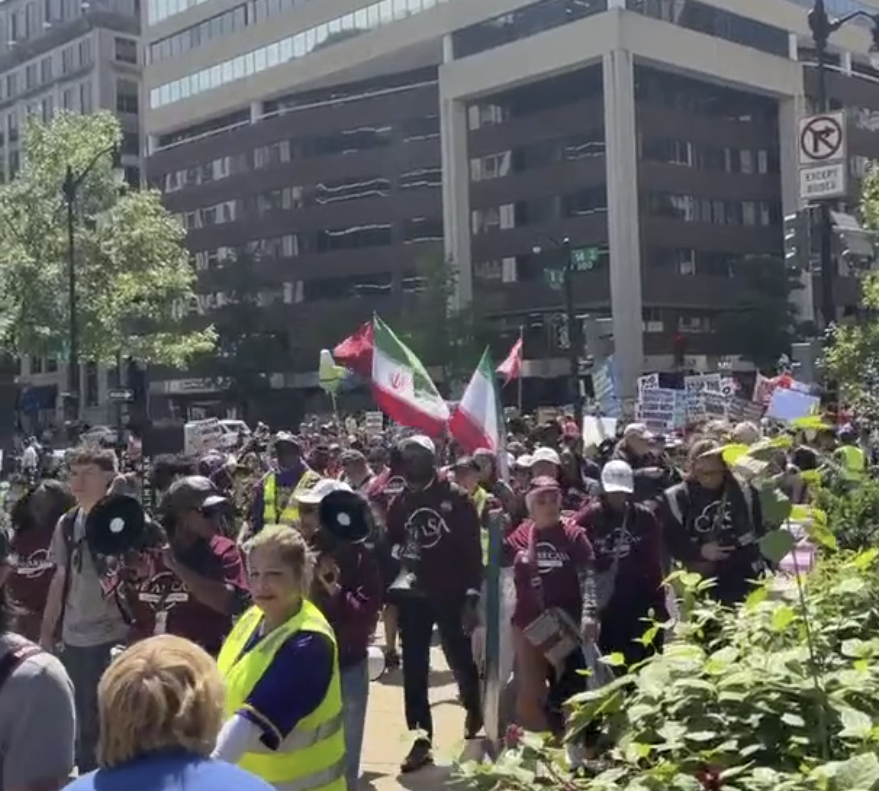
Unfortunately, Governor Spanberger vetoed the bills after the legislature rejected changes that would have delayed implementation for local workers and weakened bargaining rights and process. Additionally, the House of Delegates insisted on continuing to exclude most higher education workers (likely excluding over 60,000 of the 140,000 state employees), and neither chamber chose to include their own legislative branch employees. As public-sector workers and other advocates continue fighting for recognition of the right to collectively bargain, it will be critical to make sure the final legislation is broad and strong enough to meaningfully protect and improve our public-sector institutions.
Standardizing length of eligibility for unemployment benefits (HB 1319 / SB 760): Bills this year would have standardized at 26 weeks how long someone can get unemployment benefits if they are otherwise meeting requirements, such as actively looking for work. Unfortunately, these proposals did not pass the Senate Finance and Appropriations Committee. TCI will continue to work with partners to advance this important improvement in future years.
Domestic worker inclusion in overtime protections (HB 27 / SB 28): Federal law excludes live-in domestic workers from the overtime protections other workers receive (being paid time-and-a-half if you work more than 40 hours a week unless you are an exempt salary worker). Legislation passed this year would have closed this gap by providing Virginia overtime protections to domestic workers (except au pairs and consumer-direct home healthcare workers). However, the legislature accepted an amendment by the governor that requires the bill to be passed and signed again next year to take effect.
Prohibiting “pay or stay” contracts (HB 923): Legislation this year would have prohibited “pay or stay” contracts with exceptions for tuition payments, bona fide apprenticeship programs, signing bonuses, and certain other circumstances. However, this legislation was defeated in the Senate Commerce and Labor Committee.
Category:
Economic Opportunity
